


What is the Child and Adolescent Mental Health Initiative?
CAMHI is an initiative launched by the Stavros Niarchos Foundation (SNF) Global Center for Child & Adolescent Mental Health at the Child Mind Institute
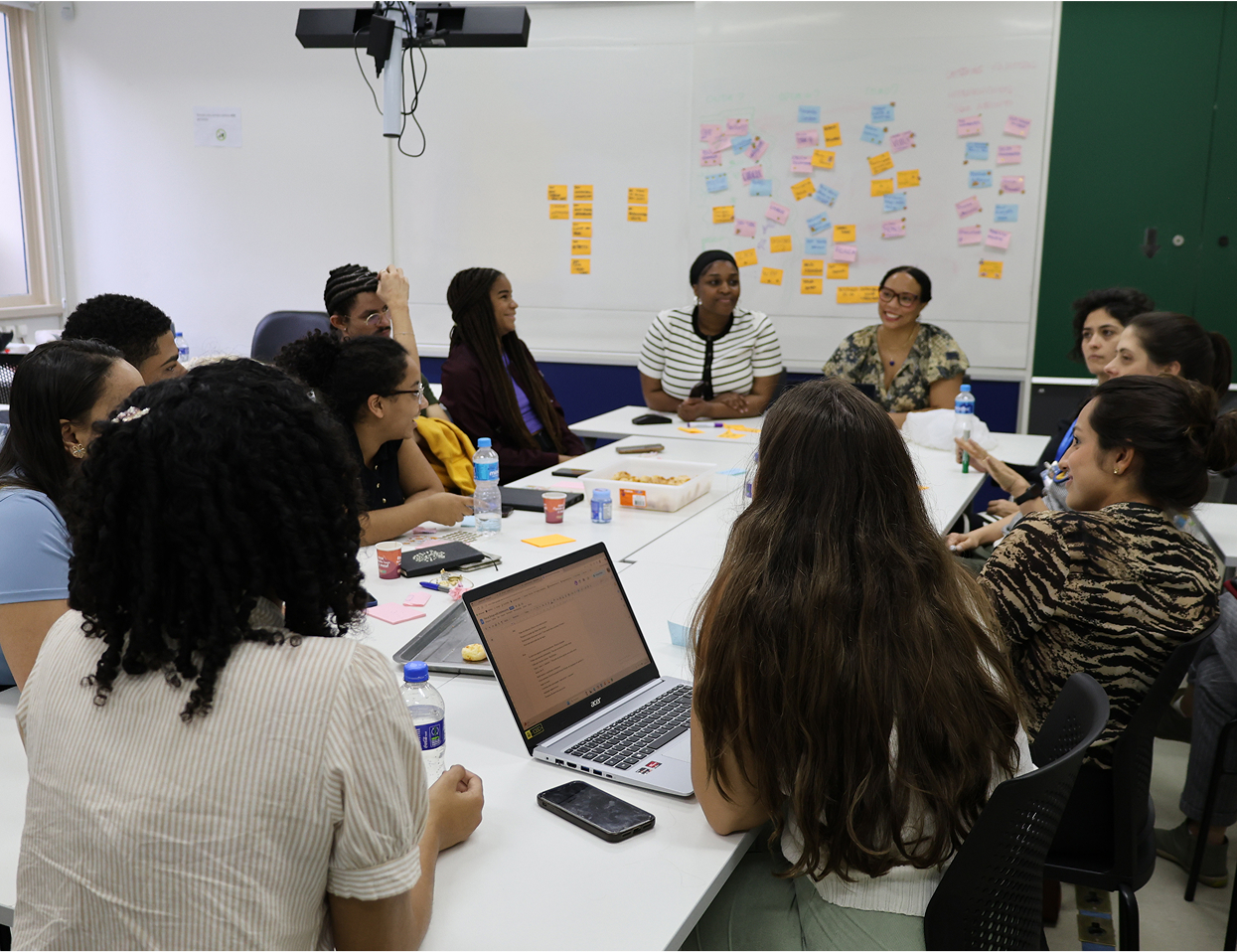
CAMHI’s goal is to strengthen the mental health of Brazilian children and youth through evidence-based approaches. We promote and support innovative, scalable solutions that are sensitive to local context and culture, playing a pivotal role in advancing the prevention, assessment, and treatment of mental health challenges affecting Brazilian youth. We foster collaboration with local experts to expand access to effective services and free, publicly accessible resources, and to improve training for both professionals and laypeople who work with our target audience.
The project is developed and implemented in partnership with local experts, universities, and community organizations, with support from the Stavros Niarchos Foundation (SNF) as part of its Global Health Initiative (GHI).
Find out more
about our five
core programmatic
activities:
1 Systematic Review
Our team of researchers have compiled prevalence estimates, assessment tools, and intervention strategies for child and adolescent mental health into curated first-of-its kind open-access databases covering mental health needs, therapies, and disorder prevalence in Brazil. This data can be used by researchers, policymakers, and mental health advocates to better understand the current mental health needs of children and adolescents in the country.
2 National Epidemiological Studies
Along with our partners, we are conducting a probability-based study to assess the prevalence of mental health conditions, risk factors, and treatment patterns in children and adolescents across Brazil, with a focus on 17 common mental health conditions. This type of nationally representative data is currently not available in Brazil, making this study a critical step toward closing major evidence gaps. The outcomes will include full psychometric assessments, instrument validations, and the creation of a national dataset, a resource that will be vital in informing public policy, guiding service planning, and supporting decision-makers committed to improving youth mental health.
3 Psychosocial Support Program for Schools
In partnership with local partners, we are developing a psychosocial support program to be offered for implementation in Brazilian public schools, where over 80 percent of Brazilian children attend. The programming will empower the school community to recognize signs of emotional distress in students ranging from six to 18-years old and to respond in an appropriate, safe and compassionate manner, promoting healthier and more supportive school environments.
4 Advanced Training Curriculum
In partnership with local partners, we are working on evidence-based Cognitive Behavior Therapy (CBT) interventions for child and adolescent anxiety, and adolescent depression as well as parent training intervention for behavior problems in children. The materials, including lectures, videos, and role-play demonstrations, are intended to facilitate professional training for treatment delivery in the public sector.
5 Youth Council
In partnership with the Institute for Health Policy Studies (IEPS), we have developed a youth council for adolescents aged 16–19, offering bi-monthly sessions to discuss mental health challenges and explore ways to drive positive change for young people across Brazil.
“One of the biggest challenges youth face today is the demonization of stress and the rise of emotional isolation, often fueled by impatience and constant digital overstimulation. Quick videos, endless notifications, and information overload make it harder to process deep emotions. That’s why mental health care needs to be daily, conscious, and accessible. We must democratize access to free therapy and self-care tools, and help young people take the lead in respecting their limits and seeking support when needed.”
Young Peacebuilders

”Two mantras in mental health are: ‘There is no health without mental health’ and ‘Mental disorders are chronic disorders of the youths’. Evidence also shows that nothing imposes higher burden in the life of youths worldwide than mental disorders. We are confident that initiatives composing the CAMHI will be a landmark in both transforming the field in our country and providing higher emotional well-being and mental health for our children and young people.”
Technical Lead, Brazil
Our mission
To improve the mental well-being of children and adolescents in Brazil by working together with youth, experts, institutions, and policymakers to develop, adapt, and evaluate resources and programs that expand access to evidence-based, culturally appropriate mental health prevention, assessment, and treatment services. We aim to strengthen local services and workforces, fight stigma, and amplify youth voices to drive lasting change.
Our vision
A Brazil where every child, adolescent, and family, no matter where they live, has access to evidence-based mental health care and trustworthy information about mental well-being, free from stigma and discrimination. By connecting research, resources, and communities, we drive local change with the power to create lasting impact by strengthening the workforce, promoting knowledge exchange, and empowering young people nationwide.

Our values

Focus on children
and adolescents
We put children and adolescents at the heart of everything we do. Most mental health challenges begin in childhood and, if left untreated, can have lasting consequences for adulthood. By focusing on prevention, early identification, and effective treatments that work for young people, we aim to build a healthier future for individuals and for Brazil as a whole.

Listen
to youth
Young people are experts in their own lives. We actively engage children and adolescents through local partnerships and our youth advisory group to ensure that programs, resources, and messages reflect their realities, needs, and aspirations, ensuring their voices guide our decision-making and solutions. We believe lasting change begins by listening to and empowering the next generation. “Nothing about us without us” is our motto.
Champion
equity in care
Every child and adolescent have the right to affordable, effective mental health care, no matter who they are or where they live. We are committed to breaking down barriers such as income disparity, and provider shortages by offering free, evidence-based resources, training, and tools that are accessible to multiple professionals across the country. We prioritize scalable and sustainable interventions that reach those most in need.

Bridge Brazilian
and global expertise
We believe in the power of collaboration. Our work is grounded in scientific and evidence-based knowledge, and strengthened through partnerships with local experts, communities, and families. By combining global knowledge with local experience, we develop culturally informed, contextually appropriate resources and effective solutions that truly meet the needs of Brazil’s youth. Advances in youth mental health are only possible with intersectoral collaboration, transdisciplinary approaches, and strong community partnerships.

Follow
the science
Our programs are rooted in evidence and guided by research. We draw on a wide range of scientifically validated approaches to address child and adolescent mental health, ensuring all interventions are rigorously evaluated for impact and adapted to the reality of Brazil’s public health system. We are committed to ongoing learning, continuous improvement, and evidence-driven action.

Raise awareness
and reduce stigma
Mental health is health. We work to naturalize conversations about mental health, challenge harmful myths, and reduce stigma and discrimination. By sharing accurate information, amplifying youth voices, and promoting understanding, we help ensure that no young person feels ashamed or alone and that everyone knows help could be available.
Our commitment to child
and adolescent mental
health in Brazil
Brazil is the largest country in South America and the fifth largest in the world, with a population of 203 million, 42 percent of whom are under the age of 30. Despite this large youth population, an estimated 80 percent of children and adolescents with mental health needs do not receive the support they require. With a limited mental health workforce, few effective interventions, widespread stigma, and fragmented support systems, the unmet need for child and adolescent mental health care is critical.
Most mental health and learning challenges begin in childhood and adolescence, yet they are often overlooked and left untreated, leading to long-term consequences for individuals and society. The urgency of this moment demands an ambitious response, one that strengthens systems, builds and augments their capacity, and improves the lives of young people and their families.
For a variety of historical, political, economic, and sociocultural reasons, child and adolescent mental health in Brazil has long been under-prioritized, and access to effective care remains unequal. However, there are promising signs of progress: national policies are evolving, political will is growing, and mental health is increasingly recognized as a fundamental human right.
Scientific understanding of child and adolescent mental health is advancing rapidly, and a wide range of evidence-based treatments now exist. At the same time, we recognize that young people’s mental health is shaped by broader social determinants, including poverty, inequality, food insecurity, violence, trauma, and bullying. Addressing these issues requires a holistic, intersectoral approach.
We know what tends to works. The challenge now is to expand access to reliable information and effective prevention and treatment services through meaningful partnerships, intersectoral collaboration, and strong community engagement.
CAMHI is committed to meeting this challenge. Through key partnerships and evidence-based programs, we are working toward a future where every child, adolescent, and family in Brazil has access to affordable, effective mental health care and stigma-free information about mental well-being.
Our Team
Behind CAMHI Brazil is a team of people from different fields, backgrounds, and experiences, united by a shared commitment: making child and adolescent mental health care more grounded in real life.
Meet our team in Brazil:
Carolina Costa
is the Brazil country manager at the Child Mind Institute. She has extensive experience in international collaboration, program management, and policy development. Before joining the Child Mind Institute, Carolina held leadership positions at the São Paulo Research Foundation, where she managed multi-national research collaborations. And as the deputy executive secretary at the Global Research Council, she advanced the international science diplomacy and collaboration agenda amongst science funders globally. She holds a Masters in Science degree in Engineering from the University of São Paulo (POLI-USP), and specializations in Public Management, Foundation School of Sociology and Politics of São Paulo (FESPSP), and in Communications Management from the University of São Paulo (ECA-USP). Carolina holds a Bachelor’s degree in International Relations from the Catholic University of São Paulo (PUC-SP).
Camila Fortes Franklin,
PhD, is a Communications and Mental Health Specialist Consultant. She is a journalist and researcher working in mental health, psychoanalysis, gender, and climate change in Brazil. She holds a PhD in Health Information and Communication from the Institute of Communication and Scientific and Technological Information in Health at the Oswaldo Cruz Foundation (ICICT/FIOCRUZ/RJ), and completed a doctoral research fellowship at the Centre for Social Studies (CES) at the University of Coimbra, Portugal. She holds a Master’s degree in Communication from the Federal University of Piauí (UFPI). She is a member of the Youth Democracy Cohort (Europe) and a researcher with NECHS (Research Group on Communication, History and Health/FIOCRUZ) and NUJOC (Research Group on Journalism and Communication/UFPI).
Julia Luiza Schäfer,
PhD, is program manager for clinical and psychosocial interventions. A clinical psychologist in Brazil trained in Cognitive Behavioral Therapy (CBT), Prolonged Exposure Therapy, and Dialectical Behavior Therapy (DBT), she coordinated community research such as the Brazilian High-Risk Cohort Study (INCT-INPD). She joined the Child Mind Institute in 2021, contributing to the mental health initiative in Greece (CAMHI) and leading mental health initiatives at Juntô Brasil. She holds a PhD in Psychiatry and Behavioral Sciences from UFRGS, an MA in Psychology from PUCRS, and a degree from UNISINOS.
Luis Augusto Rohde
is a Full Professor of Psychiatry at the Federal University of Rio Grande do Sul (UFRGS) and a professor in the Graduate Program in Psychiatry at the University of São Paulo (USP). He coordinates the ADHD Program at the Hospital de Clínicas de Porto Alegre and serves as vice-coordinator of both the National Institute of Developmental Psychiatry for Children and Adolescents and the Center for Mental Health Research and Innovation. He was the only Latin American invited to participate in the development of the DSM-5. He served as president of the World Federation of ADHD (2013–2019) and IACAPAP (2022–2026). He is a 1A Researcher at CNPq and has published over 500 articles, with around 65,000 citations and an h-index of 103. He has served as an editor for major international journals and is Editor Emeritus of the Revista Brasileira de Psiquiatria. Clarivate recognized him as a Highly Cited Researcher in 2020–2023 and 2025—a title awarded to only about 20 researchers in Brazil per edition across all scientific fields. In 2025, he received the ADHD Lifetime Achievement Award from the World Federation of ADHD and the Ruane Prize from the Brain & Behavior Research Foundation. He is the only active researcher in the country to receive an award from the BBRF.
Irenildes Silva
is an educational and psychosocial program consultant working on the adaptation and implementation of mental health and psychosocial support initiatives in educational networks across Brazil. A psychologist by training, her career spans the fields of education, philanthropy, and social development, collaborating with foundations, civil society organizations, and public institutions. Her expertise encompasses research, evaluation, strategy, implementation, and the facilitation of participatory processes. A Chevening Alumna, she holds a Master’s degree in Power, Participation and Social Change from the Institute of Development Studies (IDS) at the University of Sussex, and a Bachelor’s degree in Psychology.
Simon Cantionilia
is an International Relations student at the Federal University of Sergipe (UFS) and a communications consultant. He was a member of Juntô Jovem and serves on the Global Adolescent Advisory Board (GAAB), associated with the Deutsches Zentrum für Psychische Gesundheit (DZPG) / German Center for Mental Health. His background combines youth participation, communications, public policy, education, climate justice, and youth diplomacy, with experience across UNICEF, the G20, and other national and international initiatives.