




Black consciousness and the silent weight on mental health
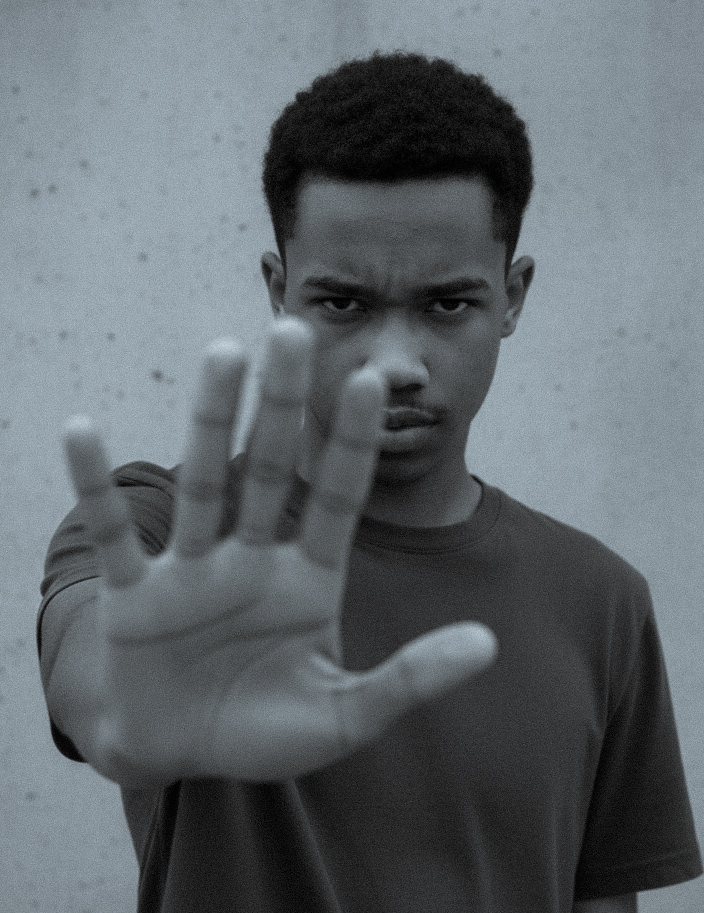
Racism causes traumas that can unfold into mental health issues. Many people still don’t realize that prejudice violates not only dignity, but also emotional well-being. Living in a country that insists on denying racism is, for Black people, a constant experience of exhaustion. It means carrying the weight of proving, all the time, that you are capable, worthy, that you belong. And this is tiring. It tires the body, the mind, the spirit.
I grew up in Timbó, in the countryside of Santa Catarina, a small town with German and Italian heritage where whiteness is the norm and difference becomes a target. Being Black there always drew attention—not because I did anything wrong, but simply because I existed. I learned to laugh at jokes that hurt me, to ignore racist comments to avoid conflict, to swallow small aggressions that piled up inside me like stones. No one taught me how to deal with any of that. We learn to resist, but we don’t learn to rest.
Racism is not just the act of discriminating. It’s also the entire environment that makes you doubt yourself. It’s the silence of institutions, the absence of representation, the lack of psychological support, and the disregard when we ask for help. It’s growing up without references, studying histories in which Black people appear only as enslaved individuals, walking into spaces and being the only one of your color. This constant isolation affects your mind, your self-esteem, and the way you see yourself.
This is no coincidence. Racism is a form of continuous violence, and violence leaves marks. When someone is disrespected because of the skin color, the brain interprets it as a threat. And when that threat is repeated over years, the body and mind begin to live in a state of alert. That’s why so many Black people feel fear, anguish, discouragement, and sometimes a kind of fatigue that not even sleep can fix. And racism is also present in places meant for care. When professionals are not trained to understand this pain, they can make it even worse.
The impact goes far beyond the individual. The shaken mental health of a Black person also affects their family, their children, their relationships, and their dreams. How many times does a Black mother teach her child to lower their head during a police stop—not out of submission, but out of fear of seeing them die? How many Black parents feel frustrated by not getting opportunities others receive with ease? How many Black youths drop out of school because they can’t endure a hostile environment? These pains accumulate generation after generation.
A matter of survival
That is why Black consciousness must go beyond November speeches. It needs to become a daily practice, a collective awareness that equality is not just an ideal—it is a matter of survival. Fighting racism is also caring for the mental health of an entire people. It means creating listening spaces, promoting accessible therapy, and training professionals who understand the specificities of the Black experience. It means allowing Black people to talk about pain without being called “victimizing,” and about achievement without being accused of exaggeration.
The struggle for Black consciousness is, at its core, a struggle for balance, peace, and humanity. It is wanting to live in a country where skin color does not determine who will suffer more, who will be more scrutinized, who will have to be stronger. And until that becomes reality, we must remember: caring for Black mental health is also a political act. It is resistance, self-care, a quiet revolution. Because no people can fully flourish while carrying the trauma of being questioned for existing.
João Pedro Santos Schroder, known as Zitto, is 18 years old and a member of Juntô Jovem, a youth committee coordinated by IEPS (Institute for Health Policy Studies) and the Child and Adolescent Mental Health Initiative (CAMHI) Brazil, launched by the Stavros Niarchos Foundation (SNF) Global Center for Child & Adolescent Mental Health at the Child Mind Institute. Zitto is the author of bill 0040/2022, which established the Municipal Black Culture Week in his hometown, Timbó (SC), when he served as Youth Councilman.
Our Voices
November 24, 2025Do you have a story
or experience about
mental health that
could inspire others?
We’d love to hear your voice!
Share your story with us for a chance to be featured and help others feel less alone.