



Brazilian experts lead South-South dialogue to reshape global youth mental health agenda in Cape Town summit
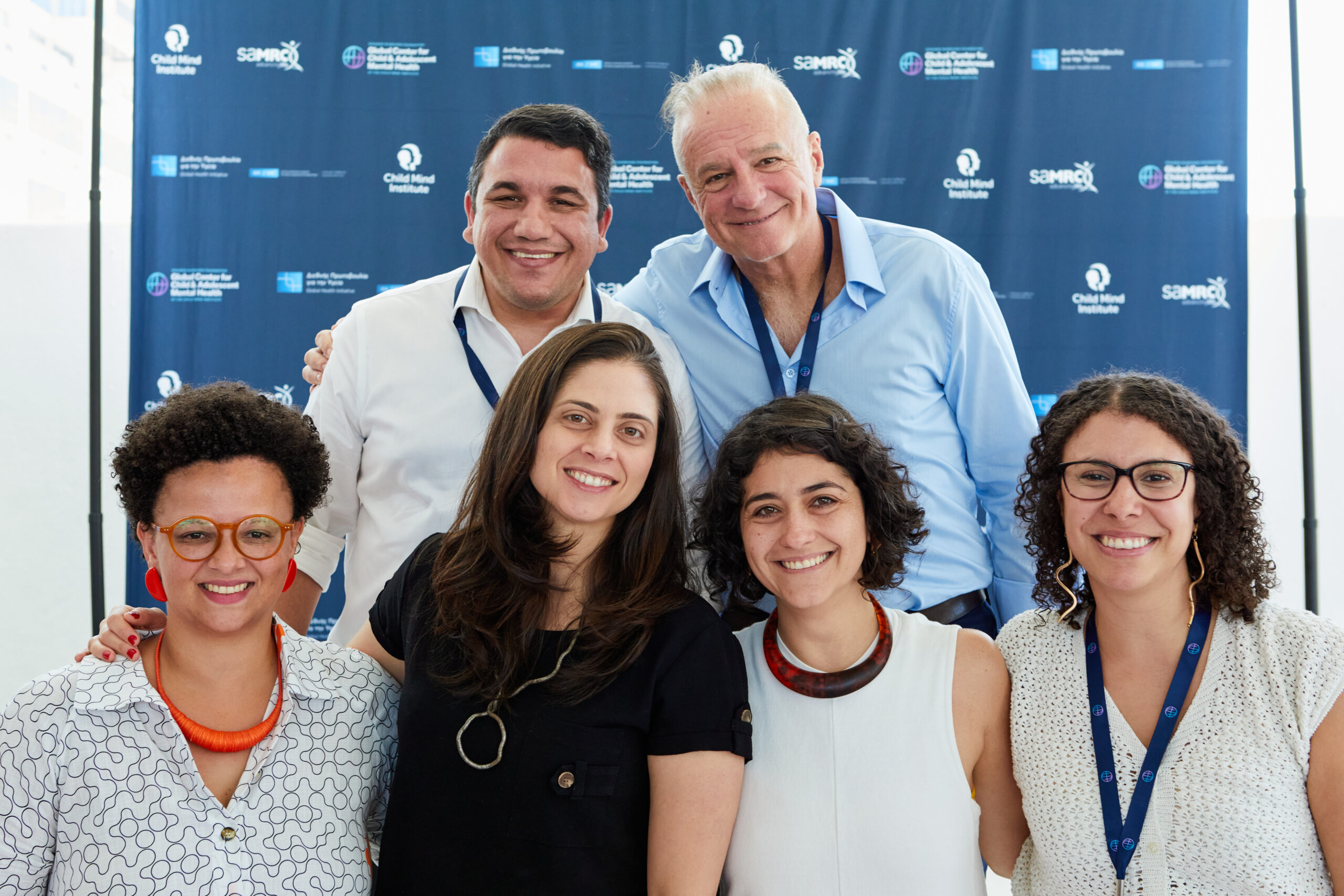
Rebeca Freitas, from IEPS: Brazilian delegates presented innovative solutions; credit: SNF Global Center
Cape Town (South Africa) – Brazilian mental health leaders were at the forefront of a landmark global summit to reshape youth mental health care through authentic South-South collaboration and youth co-creation. The event, “Beyond the Table: Youth as Co-Creators in Change for Mental Health,” emphasized actionable, culturally responsive solutions grounded in local expertise.
Convened by the Stavros Niarchos Foundation (SNF) Global Center for Child and Adolescent Mental Health at the Child Mind Institute in partnership with the South African Medical Research Council (SAMRC), the gathering united young leaders, experts, policymakers, and community representatives from across the globe. A central theme was the critical role of Brazilian methodologies in addressing universal challenges in youth mental health.
A Blueprint For Youth-Led, Collaborative Change
“Young people want to be seen and heard. This year’s theme is ‘beyond the table’ — because we are not just asking for a seat, we are partners and collaborators in shaping the future we want to see.”
This was the crux of the sentiment shared by Delice Lumba and other young leaders, mental health professionals, clinicians, South African government representatives, members of impactful community-based organizations and policy experts from South Africa and other countries last week.
The two-day gathering was anchored by a series of dynamic, youth-integrated panel discussions that brought the theme ‘Beyond the Table’ to life. Experts from South Africa, Brazil, Greece, Kenya, the United Kingdom, Mozambique, and the United States engaged in critical dialogues on transforming research into actionable, culturally relevant practices for youth mental health. Panels delved into integrating services into public health and education systems, the essential process of cultural adaptation for evidence-based interventions, and the power of community networks and advocacy to dismantle stigma.
Young leaders from the SNF Global Center Youth Council and partner organizations were not just attendees but active moderators and co-panelists, steering conversations on research priorities, accessible service design, and authentic engagement. These discussions moved from theory to practice, exploring how to bridge scientific models with integrated community-based approaches that harnessed storytelling as a force for change, ensuring youth voices were central to shaping the future of mental health support.
Brazilian Innovations Take Center Stage
The Brazilian delegation, featuring members of the Child and Adolescent Mental Health Initiative (CAMHI) Brazil, presented scalable models for engagement, research, and integrated care. In the event’s opening panel, which focused on how and when to engage young people in creating mental health supports and interventions, Dr. Patricia Bado, PhD, a consultant with CAMHI Brazil, presented the engagement method used in Rio de Janeiro—a city marked by great diversity and inequality, much like Cape Town—where young people from different regions and socioeconomic backgrounds were invited to discuss what could be done to improve youth mental health.
In another panel, Dr. Luis Rohde, MD, PhD, CAMHI Brazil scientific supervisor, presented the Library of Universal Mental Health Instruments (LUMI). This free global tool aims to solve the critical problem of incompatible data across cultures by providing psychometrically validated, cross-culturally evaluated instruments. “LUMI is like traveling the world without needing a different adapter for each country,” Rohde explained, emphasizing its potential to harmonize global research and clinical practice.
During a panel on building and connecting cultures of care, which brought together participants from Mozambique, El Salvador, South Africa, and Burundi, Dr. Irenildes Silva, M.S., a consultant with CAMHI BR, highlighted that more than simply “building bridges”, we need to converge and co-create solutions. She emphasized that integrating scientific approaches with traditional and community knowledge requires an intentional awareness of power dynamics between academia and ancestral ways of knowing, ensuring that both are valued equally.
For Dr. Silva, this confluence is essential to guarantee that people and communities facing mental health challenges receive care that is not only effective and evidence-based, but also culturally meaningful, respectful, and rooted in their own ways of understanding wellbeing.
Other contributions from Brazilian participants brought forward topics such as the cultural adaptation of evidence-based clinical practices for Cognitive Behavioral Therapy (CBT); the cross-cultural lessons that can be learned from integrating clinical practice with public health services; the technologies being incorporated into the High-Risk Cohort Study, a community-based research initiative conducted in the Brazilian cities of São Paulo and Porto Alegre; and the Brazilian public health context, with an emphasis on advocacy work.
“Our annual Expert Gatherings directly confront persistent gaps in global care,” said Dr. Giovanni Abrahão Salum, MD, PhD, Senior Vice President of Global Programs at the Child Mind Institute. “This dialogue integrated new perspectives to map a practical route for evidence-based solutions where coordinated action yields maximum impact.”
The event concluded with committed action planning, formalizing personal and institutional pledges to embed authentic youth leadership into mental health initiatives. Tendani Tsedu, MPhil, of SAMRC, underscored the imperative: “When collaboration efforts are strengthened, it helps build the capacity to create change and make a significant impact.”
By connecting fragmented programs into a coherent ecosystem, the Expert Gathering infused new energy into global mental health efforts, offering a timely blueprint for change that is youth-driven, culturally responsive, and strategically unified.
About the SNF Global Center at the Child Mind Institute
The SNF Global Center brings together the Child Mind Institute’s expertise as a leading independent nonprofit in children’s mental health and the Stavros Niarchos Foundation (SNF)’s deep commitment to supporting collaborative projects to improve access to quality health care worldwide. The center is building partnerships to drive advances in under-researched areas of children and adolescents’ mental health, and expand access to culturally appropriate training, resources, and treatment in low- and middle-income countries. This work is conducted by the Child Mind Institute with support from SNF through its Global Health Initiative (GHI).
About the Child Mind Institute
The Child Mind Institute is dedicated to transforming the lives of children and families struggling with mental health and learning disorders by giving them the help they need. We’ve become the leading independent nonprofit in children’s mental health by providing gold-standard, evidence- based care, delivering educational resources to millions of families each year, training educators in underserved communities, and developing tomorrow’s breakthrough treatments.
About the South African Medical Research Council
The SAMRC was established in 1969 and is dedicated to improving the health of people in South Africa, through research, innovation, development, and technology transfer. The scope of research includes laboratory investigations, clinical research, and public health studies. The includes research on South Africa’s quadruple burden of disease: maternal, newborn and child health, HIV/AIDS and TB, non-communicable diseases, and interpersonal violence.
Press Releases
December 2, 2025Give us your
feedback
Let us know what topics you would like to see on our website