




Drinking alcohol or using tobacco, nicotine, or other drugs
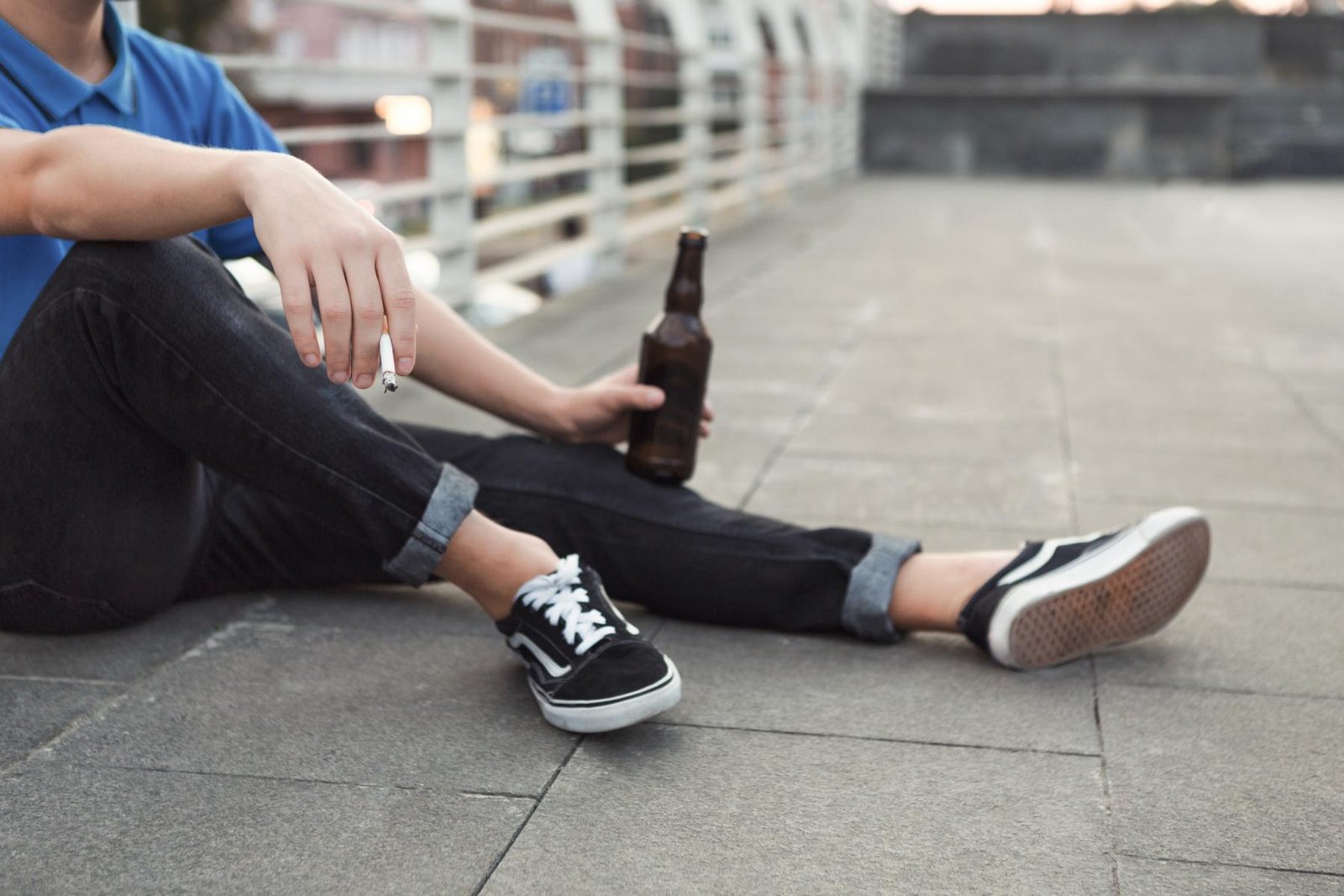
During your teen years, you might try alcohol or substances for a variety of reasons. It’s common to feel curious. You may start drinking alcohol or using other substances because you see others using them, but also because you feel peer pressure.
Alcohol is legal for adults to drink in most places. It is often shown in ads as something fun and exciting. The same goes for tobacco products like vapes, e-cigs, and cigarettes. Many adults use alcohol and tobacco to relax and enjoy social events, which can give the impression that they’re harmless. However, these substances, and others, can also be used in unhealthy ways, such as trying to fix anxiety, depression, or loneliness. Because substances can be addictive, they can also be dangerous, especially when you are adolescents, because the brain is still developing and more vulnerable.
Other worrying substances include marijuana (like cannabis, edibles, leaf, THC oil, dabs, vapes), hallucinogens (like LSD, PCP, mushrooms, ketamine), sedatives (like Xanax, Ambien, Rivotril, Diazepam), stimulants (like Adderall, cocaine, ecstasy, Ritalin), opioids (like heroin, Vicodin, Percocet, morphine), anabolic steroids, inhalants (like glue, whippets), and date rape drugs (like roofies). Even though these substances are either illegal, even for adults, or only available with a doctor’s prescription, they still find their way into your lives and are dangerous to your health and well-being.
Often, those who use substances a lot are trying to “solve a problem.” When substances seem to help with the problem or need, their use can be “reinforcing,” meaning that a person is more likely to keep taking them.
Substances seem to help with relaxing, curing boredom, fitting in socially, escaping emotional or physical pain, dealing with bad memories, relieving anxiety, going to sleep, or just feeling a temporary high. It is important to understand why substances seem appealing to you so you can address their use and prevent negative consequences. And if use becomes a problem, asking for help isn’t a sign of weakness; it’s the first step toward regaining control and truly taking care of yourself.
What is typical use?
None. There is no typical, safe, or expected use of alcohol or substances during childhood or teen years.
Alcohol and other substances are illegal for minors. But we still get curious and might see them around. We might be offered these things or pressured to use them. This happens, but it doesn’t mean it’s safe. If we have problems like anxiety, depression, behavior issues, or trouble paying attention, we might be more likely to try them. But it’s important to know that this doesn’t solve the problem; it only increases the risks.
Many adults drink alcohol sometimes. But teenagers’ bodies and brains do not handle alcohol the same way adults do. The effects can be more intense. We might feel the fun effects more, which can make us use too much and lose control. Our brains are still developing, especially in the areas related to memory, learning, emotions, and decision-making. When substances interfere with this process, they can impair your concentration, motivation, and even your ability to make good decisions.
Using alcohol or substances can seem helpful at first (like making us less anxious or making a moment more fun). But using them more can lead to problems with our physical growth, school, social life, and risky behaviors. This means that substance use during adolescence can not only cause immediate problems but also hinder your future. Taking care of your body and mind now is investing in the future you want to live.
When should I be concerned?
Any alcohol or substance use by teens should be a concern. The longer a substance is used, the more addictive and dangerous it becomes. There are some signs that indicate that use may be becoming a serious problem:
Signs of substance use problems:
- Changes in daily life: Changes in behavior, routines, and friends.
- Emotional changes: Mood swings, irritability, arguments.
- Physical changes: Restlessness, being too active or very tired and lacking energy.
- Declining performance: Lower grades, skipping school, poor performance at school or work.
- Loss of interest: Losing interest in hobbies and activities you once enjoyed.
- Concerns from others: Concerns from teachers, classmates, friends, or family.
- Different relationships: Changing friends, isolating yourself, or distancing yourself from important people.
- Risky behaviors: Dangerous behaviors (fighting, impaired driving, risky sexual activity).
- Social withdrawal: Isolating from friends, missing school events.
- Financial issues: Borrowing or stealing money or things.
- Missing items at home: Missing prescription drugs or alcohol.
- Everyday dependence: Feeling like substances are needed for school, to have fun, relax, or cope with problems.
- Loss of control: Unable to stop using, even if wanting to.
- Using tobacco or nicotine products shortly after waking up.
- Using more tobacco or nicotine products upon waking than later in the day.
- Craving tobacco or nicotine products when not allowed to use them.
- Experiencing restlessness when unable to use tobacco or nicotine products.
- Drinking more or for longer than intended.
- Difficulty reducing alcohol consumption.
- Spending excessive time obtaining or consuming alcohol or recovering from its effects.
- Experiencing strong cravings for alcohol.
- Neglecting responsibilities due to alcohol use.
- Continuing alcohol use despite negative consequences.
- Engaging in risky behaviors while under the influence of alcohol.
- Experiencing withdrawal symptoms after reducing alcohol intake.
- Using drugs more or for longer than intended.
- Difficulty reducing drug use.
- Spending excessive time obtaining or consuming drugs or recovering from their effects.
- Experiencing strong cravings for drugs.
- Neglecting responsibilities due to drug use.
- Continuing drug use despite negative consequences.
- Engaging in risky behaviors while under the influence of drugs.
- Experiencing withdrawal symptoms after reducing drug intake.
If you notice several of these signs in yourself or someone close to you, you don’t have to face it alone. Talking to someone you trust is the first step toward regaining control.
What can I do if I (or a friend) struggle?
If you have problems with alcohol or other substances, try these things:
- Ask for help: Talk to a trusted adult (parent, family member, teacher, or someone you trust to listen). Don’t be shy about asking for support. Talking about feelings, social pressure, or sadness helps organize your thoughts and can reduce the need to use substances.
- Understand the risks: Alcohol and drugs can have serious consequences. They can lead to dangerous situations, hurt your schoolwork and relationships, and affect your future.
- Say “no”: Saying no to friends shows confidence and strength. This won’t make you “less cool” or “less of a friend.” On the contrary, it will help you take better care of your relationships.
- Understand yourself: Notice what makes you want to use substances and how you feel before and after. This can help you better understand these choices. If it’s to feel included, know that needing to use a substance to have fun and be loved by your friends is a warning sign.
- Get help for other problems: If you have anxiety, worry a lot, or have trouble paying attention, getting help for those problems can lower your risk of using alcohol or drugs.
- Set small, realistic goals: Aiming for things like reducing use or spending more time on healthy activities (sports, arts, etc.) helps you see progress.
Seeking guidance doesn’t mean you’re “problematic,” but rather that you’re taking control of your own life and seeking healthier alternatives.
What kind of professional support can I seek out?
It’s normal to feel embarrassed or guilty about substance use. But help is available.
Talk to your pediatricianor family doctor. They can refer you to specialists. Mental health professionalscan offer therapy and guidance. It’s essential to understand that asking for help isn’t a weakness: it’s a way to protect your health, maintain healthy relationships, improve academic performance, and ensure that future choices are informed.
Sometimes it seems like using a substance helps you forget things for a while. But soon after, the feelings return, and sometimes even more confusing. It’s better to find ways to deal with what you’re truly feeling than to try to hide it. For that, you can ask for help.
Public services are also available through the Unified Health System (SUS). You can find support at places like your local Basic Health Unit (UBS), Child and Adolescent Psychosocial Care Centers (CAPS i), and public outpatient clinics.
Onde encontrar
mais informações
Saiba como funciona o SUS para saúde
mental de crianças e adolescentes.
What did you
think of the guides?
Tell us what you think of the guides! Your feedback can help us improve them. Is there a topic you’ve been looking for and haven’t found?