




Separation Anxiety Disorder
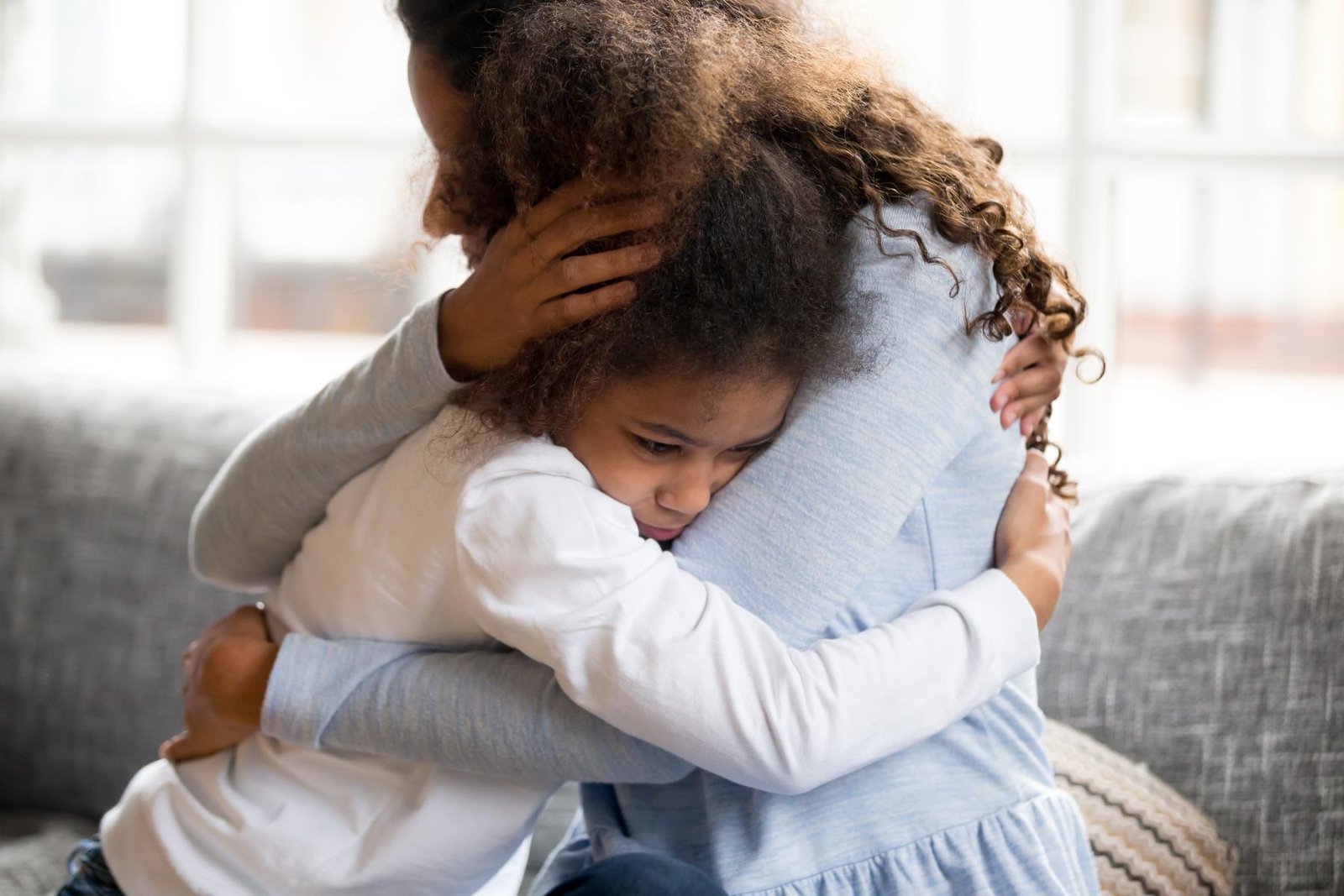
It is normal for children to feel upset when they are away from their caregivers, especially the first few times. This upset feeling might include clinginess, crying, or trouble calming down after a caregiver leaves. These feelings are usually mild and go away quickly. Children with Separation Anxiety Disorder feel extreme anxiety when they are away from their caregivers. Besides fearing being apart, they might worry that something bad will happen to them or their family when they are apart, leading to nightmares, not wanting to leave home, and various physical symptoms. The disorder is most common among preschoolers and young children, but some older children and teens may also have it.
What are the symptoms of Separation Anxiety Disorder?
The fear, anxiety, or avoidance that children with Separation Anxiety Disorder feel is much more than what is normal for their age. Specific symptoms include:
Core symptoms
– Distress when thinking about or during separation from a caregiver
– Worry that something bad will happen to a caregiver (e.g., illness, injury, death)
– Worry that an unexpected event will cause separation from a caregiver (e.g., getting lost, kidnapped, accident, illness)
– Not wanting or refusing to leave home (e.g., go to school, go on a playdate) due to fear of separation
– Not wanting or refusing to be alone at home or in other places without a caregiver (e.g., following a caregiver around the house)
– Not wanting or refusing to sleep without being near a caregiver
– Regular nightmares about separation or bad things happening to caregivers
– Regular physical complaints (e.g., stomachaches, headaches, dizziness) when thinking about or during separation from a caregiver
How is Separation Anxiety Disorder diagnosed?
A child-adolescent psychiatrist will diagnose a child or teen with Separation Anxiety Disorder after checking if the fear, anxiety, or avoidance meets the diagnostic criteria; the symptoms last at least four weeks; and the symptoms cause significant problems in everyday life (e.g., social, school, etc.). Severe separation anxiety may develop in children and teens who did not have concerns about separation before.
The child-adolescent psychiatrist may interview and/or assess both the child and a caregiver to figure out the specific nature of the child’s separation anxiety. Many practitioners also use questionnaires or behavior/emotion rating forms to help with the diagnosis and measure the severity of the problem. The practitioner will also try to determine that the child’s or teen’s anxiety is not related to something unexpected.
Separation Anxiety Disorder facts
Worldwide frequency of the condition:
Separation Anxiety Disorder is estimated to affect approximately 4% of the global population, although this frequency varies by age group. Anxiety disorders, in general, are estimated to affect 6.5% of the global population.
Impact of the condition in Brazil:
Despite limited data, the estimated prevalence of anxiety disorders in Brazil is 2.9% in children (5-9 years) and 8.6% in adolescents (10-19 years). Separation anxiety is a type of anxiety disorder, and regarding it alone, there is no nationally representative data.
Gender ratio:
The diagnosis is equally common among preschool-aged boys and girls but becomes more common in girls during the school years, although estimates vary.
Peak age of onset:
The most common age of onset is between 7 and 9 years, slightly later than the average for anxiety disorders in general, which is 5.5 years.
Proportion of the condition that emerges before age 18:
Proportion of cases starting before age 18:
According to recent data, 75% of people with Separation Anxiety Disorder will have been diagnosed before age 18.
What are the associated factors for Separation Anxiety Disorder?
Some common factors linked with Separation Anxiety Disorder are:
– Genetic and familial factors: A tendency toward an anxiety disorder most likely comes from a combination of multiple genes interacting with environmental factors.
– Environmental factors: These include stressful life events, such as losing a relative or pet, a relative with a serious illness, changing schools, caregiver divorce or separation, moving or immigration, and separation from a caregiver during a stressful time (e.g., natural disaster).
What other disorders co-occur with Separation Anxiety Disorder?
Even though each child is different, Separation Anxiety Disorder might often happen with Generalized Anxiety Disorder (GAD) and Specific Phobia in children.
How is Separation Anxiety Disorder treated?
Separation Anxiety Disorder is usually treated with therapy or a combination of therapy and medication. Caregivers and other family members are an important part of treatment, since they can help kids and teens practice the skills they learn in therapy.
There are many therapies that effectively treat symptoms of Separation Anxiety Disorder, but the one with the most evidence is called cognitive-behavioral therapy (CBT). CBT uses many different cognitive and behavioral techniques. One technique is called exposure. Using this technique, a therapist exposes the child to something that triggers anxiety, starting with something very small. As the child becomes upset, the therapist teaches them ways to handle their fear. They repeat this process with bigger and bigger stressors. Group-based CBT has been shown to be especially helpful for children and teens.
Children and teens with Separation Anxiety Disorder tend to respond well to certain antidepressant medications called selective serotonin reuptake inhibitors (SSRIs). These include fluoxetine, sertraline, citalopram, escitalopram, and paroxetine. Other medications called serotonin and norepinephrine reuptake inhibitors (SNRIs), such as duloxetine and venlafaxine, are also effective for reducing anxiety in children and teens. Benzodiazepines (e.g., alprazolam, lorazepam, diazepam) and tricyclic antidepressants (e.g., clomipramine, amitriptyline) are not effective in children and teens and should not be used. Medications can have side effects, but they are safe for kids to use with proper monitoring by their Child Adolescent Psychiatrist and close supervision from their caregivers. A child or teen taking one of these medications should see their doctor regularly, especially if their dosage has recently changed.
The combination of CBT and SSRIs/SNRIs can also be considered, since some studies show evidence that the combination is better than either treatment alone in children and teens.
References
Clinical description, symptoms, and diagnostic information
– American Psychiatric Association. (2022). Diagnostic and Statistical Manual of Mental Disorders: Fifth Edition Text Revision DSM-5-TR. American Psychiatric Association Publishing, Washington, DC.
– Child Mind Institute. (2021, September 7). Separation Anxiety Disorder in children: A quick guide. _https://childmind.org/guide/quick-guide-to-separation-anxiety-disorder/_
– World Health Organization. (2022, February). ICD-11 for mortality and morbidity statistics. 6B05 Separation Anxiety Disorder. _https://icd.who.int/browse11/l-m/en#/http%3a%2f%2fid.who.int%2ficd%2fentity%2f830200631_
Facts
– American Psychiatric Association. (2022). Diagnostic and Statistical Manual of Mental Disorders: Fifth Edition Text Revision DSM-5-TR. American Psychiatric Association Publishing, Washington, DC.
– Institute for Health Metrics and Evaluation (IHME). (2019). GBD Compare Data Visualization. Seattle, WA: IHME, University of Washington, Available from _http://vizhub.healthdata.org/gbd-compare_. (Accessed 11/15/2022)
– Figueroa, A., Soutullo, C., Ono, Y., & Saito, K. (2012). Separation anxiety. In Rey J.M. (ed.), IACAPAP e-Textbook of Child and Adolescent Mental Health. Geneva: International Association for Child and Adolescent Psychiatry and Allied Professions.
– Polanczyk, G. V., Salum, G. A., Sugaya, L. S., Caye, A., & Rohde, L. A. (2015). Annual research review: A meta-analysis of the worldwide prevalence of mental disorders in children and adolescents. Journal of Child Psychology and Psychiatry, 56(3), 345–365. _https://doi.org/10.1111/jcpp.12381_
– Sacco, R., Camilleri, N., Eberhardt, J., Umla-Runge, K., & Newbury-Birch, D. (2022). A systematic review and meta-analysis on the prevalence of mental disorders among children and adolescents in Europe. European Child & Adolescent Psychiatry. _https://doi.org/10.1007/s00787-022-02131-2_
– Solmi, M., Radua, J., Olivola, M., Croce, E., Soardo, L., Salazar de Pablo, G., Il Shin, J., Kirkbride, J. B., Jones, P., Kim, J. H., Kim, J. Y., Carvalho, A. F., Seeman, M. V., Correll, C. U., & Fusar-Poli, P. (2022). Age at onset of mental disorders worldwide: Large-scale meta-analysis of 192 epidemiological studies. Molecular Psychiatry, 27(1), 281–295. _https://doi.org/10.1038/s41380-021-01161-7_
– Vasileva, M., Graf, R. K., Reinelt, T., Petermann, U., & Petermann, F. (2021). Research review: A meta‐analysis of the international prevalence and comorbidity of mental disorders in children between 1 and 7 years. Journal of Child Psychology and Psychiatry, 62(4), 372–381. _https://doi.org/10.1111/jcpp.13261_
Associated factors
– American Psychiatric Association. (2022). Diagnostic and Statistical Manual of Mental Disorders: Fifth Edition Text Revision DSM-5-TR. American Psychiatric Association Publishing, Washington, DC.
– Ayano, G., Betts, K., Maravilla, J. C., & Alati, R. (2021). The risk of anxiety disorders in children of parents with severe psychiatric disorders: A systematic review and meta-analysis. Journal of Affective Disorders, 282, 472–487. _https://doi.org/10.1016/j.jad.2020.12.134_
– Kendler, K. S. (2013). What psychiatric genetics has taught us about the nature of psychiatric illness and what is left to learn. Molecular Psychiatry, 18(10), 1058–1066. _https://doi.org/10.1038/mp.2013.50_
– Lawrence, P. J., Murayama, K., & Creswell, C. (2019). Systematic Review and Meta-Analysis: Anxiety and Depressive Disorders in Offspring of Parents With Anxiety Disorders. Journal of the American Academy of Child & Adolescent Psychiatry, 58(1), 46–60. _https://doi.org/10.1016/j.jaac.2018.07.898_
– Ståhlberg, T., Khanal, P., Chudal, R., Luntamo, T., Kronström, K., & Sourander, A. (2020). Prenatal and perinatal risk factors for anxiety disorders among children and adolescents: A systematic review. Journal of Affective Disorders, 277, 85–93. _https://doi.org/10.1016/j.jad.2020.08.004_
Co-occurring disorders
– American Psychiatric Association. (2022). Diagnostic and Statistical Manual of Mental Disorders: Fifth Edition Text Revision DSM-5-TR. American Psychiatric Association Publishing, Washington, DC.
– Saha, S., Lim, C. C. W., Cannon, D. L., Burton, L., Bremner, M., Cosgrove, P., Huo, Y., & McGrath, J. (2021). Co‐morbidity between mood and anxiety disorders: A systematic review and meta‐analysis. Depression and Anxiety, 38(3), 286–306. _https://doi.org/10.1002/da.23113_
Interventions
– Correll, C. U., Cortese, S., Croatto, G., Monaco, F., Krinitski, D., Arrondo, G., Ostinelli, E. G., Zangani, C., Fornaro, M., Estradé, A., Fusar‐Poli, P., Carvalho, A. F., & Solmi, M. (2021). Efficacy and acceptability of pharmacological, psychosocial, and brain stimulation interventions in children and adolescents with mental disorders: An umbrella review. World Psychiatry, 20(2), 244–275. _https://doi.org/10.1002/wps.20881_
– Cuijpers, P., Cristea, I. A., Karyotaki, E., Reijnders, M., & Huibers, M. J. H. (2016). How effective are cognitive behavior therapies for major depression and anxiety disorders? A meta-analytic update of the evidence. World Psychiatry, 15(3), 245–258. _https://doi.org/10.1002/wps.20346_
– Gosmann, N. P., Costa, M. de A., Jaeger, M. de B., et al. (2021). Selective serotonin reuptake inhibitors, and serotonin and norepinephrine reuptake inhibitors for anxiety, obsessive-compulsive, and stress disorders: A 3-level network meta-analysis. Patel V, ed. PLoS Med, 18(6), e1003664. _https://doi.org/10.1371/journal.pmed.1003664_
– Schopf, K., Mohr, C., Lippert, M. W., Sommer, K., Meyer, A. H., & Schneider, S. (2020). The role of exposure in the treatment of anxiety in children and adolescents: Protocol of a systematic review and meta-analysis. Systematic Reviews, 9(1), 96. _https://doi.org/10.1186/s13643-020-01337-2_
– Schwartz, C., Barican, J. L., Yung, D., Zheng, Y., & Waddell, C. (2019). Six decades of preventing and treating childhood anxiety disorders: A systematic review and meta-analysis to inform policy and practice. Evidence Based Mental Health, 22(3), 103-110. _https://doi.org/10.1136/ebmental-2019-300096_
– Wang, Z., Whiteside, S. P. H., Sim, L., et al. (2017). Comparative effectiveness and safety of cognitive behavioral therapy and pharmacotherapy for childhood anxiety disorders: A systematic review and meta-analysis. JAMA Pediatrics, 171(11), 1049. _https://doi.org/10.1001/jamapediatrics.2017.3036_
Onde encontrar
mais informações
Saiba como funciona o SUS para saúde
mental de crianças e adolescentes.
What did you
think of the guides?
Tell us what you think of the guides! Your feedback can help us improve them. Is there a topic you’ve been looking for and haven’t found?