




My Message to Young People: Take Up Space
One important, if not essential, step in developing effective public policies is listening to the people they are meant to serve. When it comes to projects focused on youth and adolescent mental health, this need becomes even more urgent. Young people in the 21st century have grown up in a world of constant change and innovation—changes that older generations may have witnessed, but not with the same intensity. That’s why using our voices to help shape programs and policies is so important. After all, young people understand youth best.
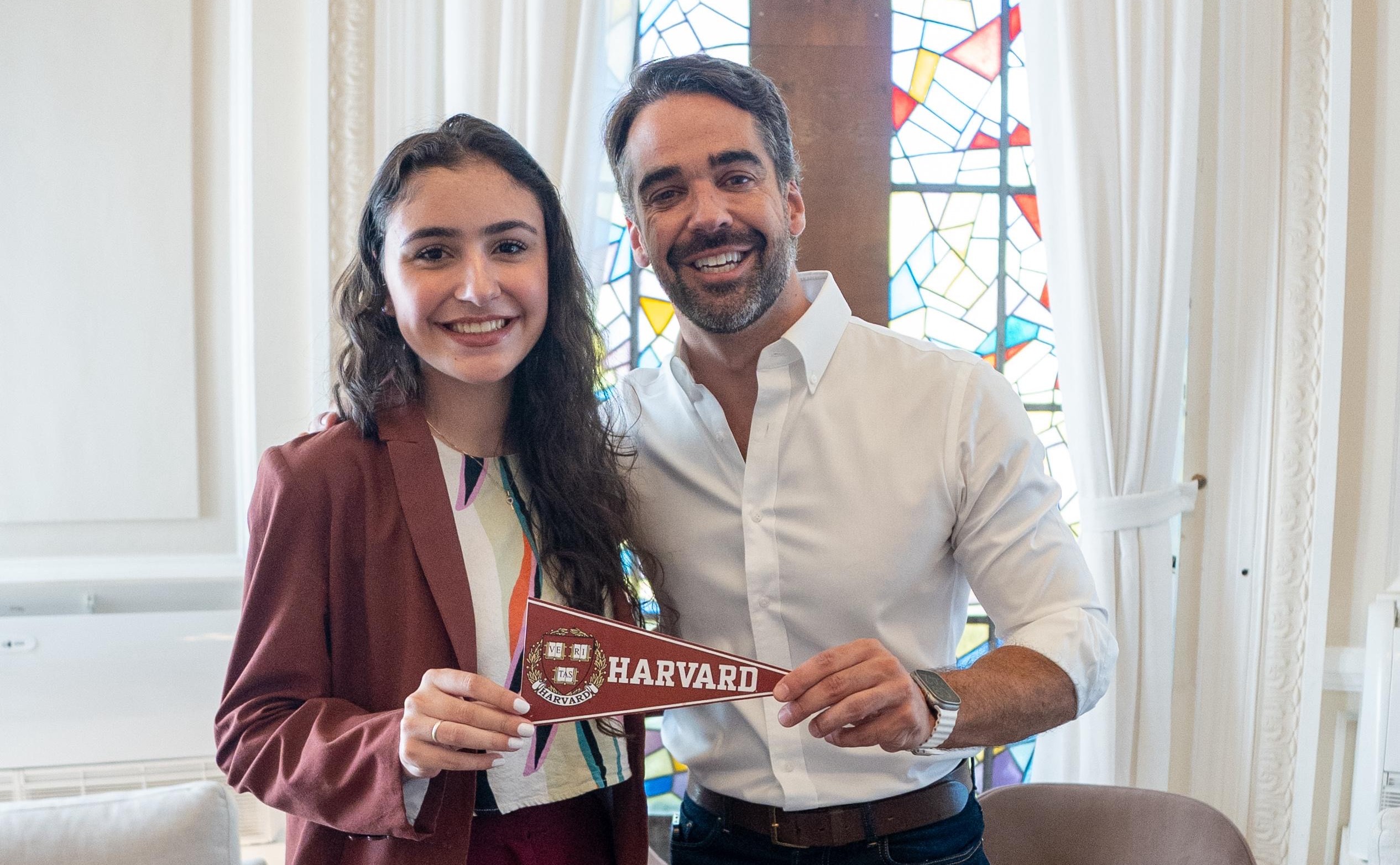
On January 21, 2026, I had a unique opportunity for intergenerational dialogue. After being admitted to the prestigious Harvard University in the USA, I was invited to a conversation with the Governor of Rio Grande do Sul, Eduardo Leite, and the State Secretary of Education, Raquel Teixeira, at Piratini Palace. I took the opportunity to ask them about how the National Policy for Psychosocial Support in School Communities is being implemented. I learned that Rio Grande do Sul has launched the Geração Consciente project, which engages young people in mental health discussions through gamification, and created the Núcleo de Cuidado e Bem-Estar, a center that analyzes and coordinates mental health initiatives in state schools.
On a personal level, the greatest takeaway from that experience was realizing how rare having access as a young person to this kind of space truly is. So what explains this gap?
Taking up space
In my first year of high school, I noticed that Santa Maria, my hometown, had a large youth population, partly due to the many schools in the area and the presence of the Universidade Federal de Santa Maria. I decided to write a bill proposing the creation of a Youth City Council to encourage young people’s participation in political decision-making processes. However, when I reached out to city council members, a young person advocating for youth causes was met with scepticism. Meetings were scheduled and held, and although there was a narrative of support, I did not feel truly heard.
The same dynamic happens in many other spaces⸺at school, in the job market, at home, and beyond. Society expects young people to take steps toward becoming active citizens, but not necessarily to be active citizens right now. In other words, we are expected to study and prepare for the future, but not to be heard in the present. As a result, we often begin to doubt ourselves and our ability to contribute.
We are the present
The messaging that tells us that we can not contribute to the present becomes an obstacle not only to our professional growth but also to our mental health. In a world that is in a constant process of change, the innovation, courage, and energy of young people become the main drivers of progress. That is exactly where our role should be. We must understand that we are not only the future — we are the present.
When we reach leadership positions in our careers, we must take responsibility for opening new paths for other young people, building more diverse and representative environments. Even more importantly, we must not give up on occupying the spaces that rightfully belong to us. Even when we feel out of place or underestimated, it is essential to remember that our perspective carries value. With every step forward, we can help ensure that youth participation stops being the exception and becomes the norm — strengthening a cycle of recognition and belonging.
Little by little, this makes possible the kinds of encounters that once seemed unlikely. Young people stop being mere spectators and move to the center of decisions that directly impact their lives. I believe in this, and CAMHI Brazil believes in it, too.
Mariana Rodrigues Chaves is a member of the Youth Council of the Child & Adolescent Mental Health Initiative (CAMHI) Brazil. This fall she will study Governance and Economics at Harvard University in Cambridge, Massachusetts.
Our Voices
February 26, 2026Do you have a story
or experience about
mental health that
could inspire others?
We’d love to hear your voice!
Share your story with us for a chance to be featured and help others feel less alone.