



‘Finding your crowd’: adolescents and collective projects
Youth groups with common interests prove how being among peers helps the mental health of the new generation
By Célia Fernanda Lima
This article was originally published in Lunetas on August 21, 2026.
At 13 years old, Ryan says he’s not ashamed to go on stage and speak into a microphone. “If it’s about the environment and my community, I’ll talk about it.” A resident of the rural community of Brito, in Cascavel, in the interior of Ceará, the boy says he’s always been a talkative boy, but he didn’t have the opportunity to exchange ideas with more people besides his few classmates at the rural school and his three siblings. “Since I participated in the Conference for the Environment and met the Youth Collective, I’ve been able to learn from many people and express myself more in public,” he recalls.
He is one of the delegates of the Ceará Youth Collective for the Environment, a youth mobilization linked to projects of the Ministry of the Environment. Ryan represents his community in meetings and events, participates in important decisions for the group, and shares experiences with people of the same age and older youths. “Just as a baby learns how to speak from its parents, I feel that when I’m with the collective, I learn how to speak and I teach as well. Our legacy is knowing that young people educate young people,” he affirms.
Ryan’s self-confidence came not only from a reason to fight, but was shaped by experiences within the collective. The group’s coordinator and mobilizer, Bárbara Cruz, explains that in the schools where the Youth Collective operates, the most interested students begin their journey as delegates, participating in meetings and committees on the environment.
In these meetings, Bárbara observes that the more engaged they become, the better their performance improves inside and outside the classroom. “Teenagers show greater interest in their studies, become more participatory in school, and develop leadership skills. The feeling of belonging and being valued motivates them,” she says.
She also notices that teenagers who are more shy or insecure about expressing themselves begin to communicate better and defend their ideas. “They become more confident, expand their circles of friends, learn to work as a team, develop empathy, and interact with people from different backgrounds and with different opinions,” he points out.
This was the case for Valter Júnior, from Groaíras (CE), who has participated in the collective since he was 13 years old. Today, at 26, he affirms that the main lesson learned was socialization. “Along this path, I learned much more than environmental issues. I learned about leadership, teamwork, social mobilization, listening, dialogue, and about giving to others.”
Another participant is Jean Júnior, from Maracanaú (CE), who currently mobilizes other boys and girls in schools in the state. “Being part of the project transformed my individual awareness into collective action. It helped my critical thinking and understanding that environmental education is essential from basic education to adulthood,” he says.
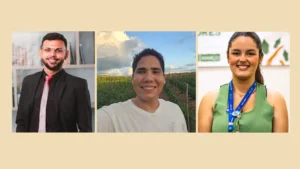
A youth collective brings together Valter, Jean, and Bárbara, activists who have worked together since adolescence and recognize the impact of this shared experience on their lives. Source: Personal archive.
When Being Together Is Good for Mental Health
Participants in the Youth Collective demonstrate that belonging to a project with regular meetings, shared tasks, and a purpose brings benefits to childhood and adolescence. Being with peers is a positive way to stimulate social skills, especially in a scenario where 11 to 20% of the population aged 10 to 19 years faces some kind of mental disorder in Brazil. These data come from a report by the Institute for Studies on Health Policies (IEPS), which mapped research on the mental health of children and adolescents in the country.
In Manaus (AM), 17-year-old student Isadora recalls the difficulty in approaching people outside her family circle. “I was more shy and afraid to talk to new people. Participating in a project helped me develop more confidence to express myself and share my opinions,” she says.
The teenager is part of the Juntô Jovem project, a Brazilian initiative for the mental health of children and adolescents, which brings together a youth committee to discuss and suggest improvements in public policies in this area. “Meeting young people from different places and backgrounds, and hearing their stories, broadened my worldview and my understanding of mental health,” he says. “Juntô helped me to know myself better, to understand my emotions, and to develop a more attentive and human perspective on myself and others.”
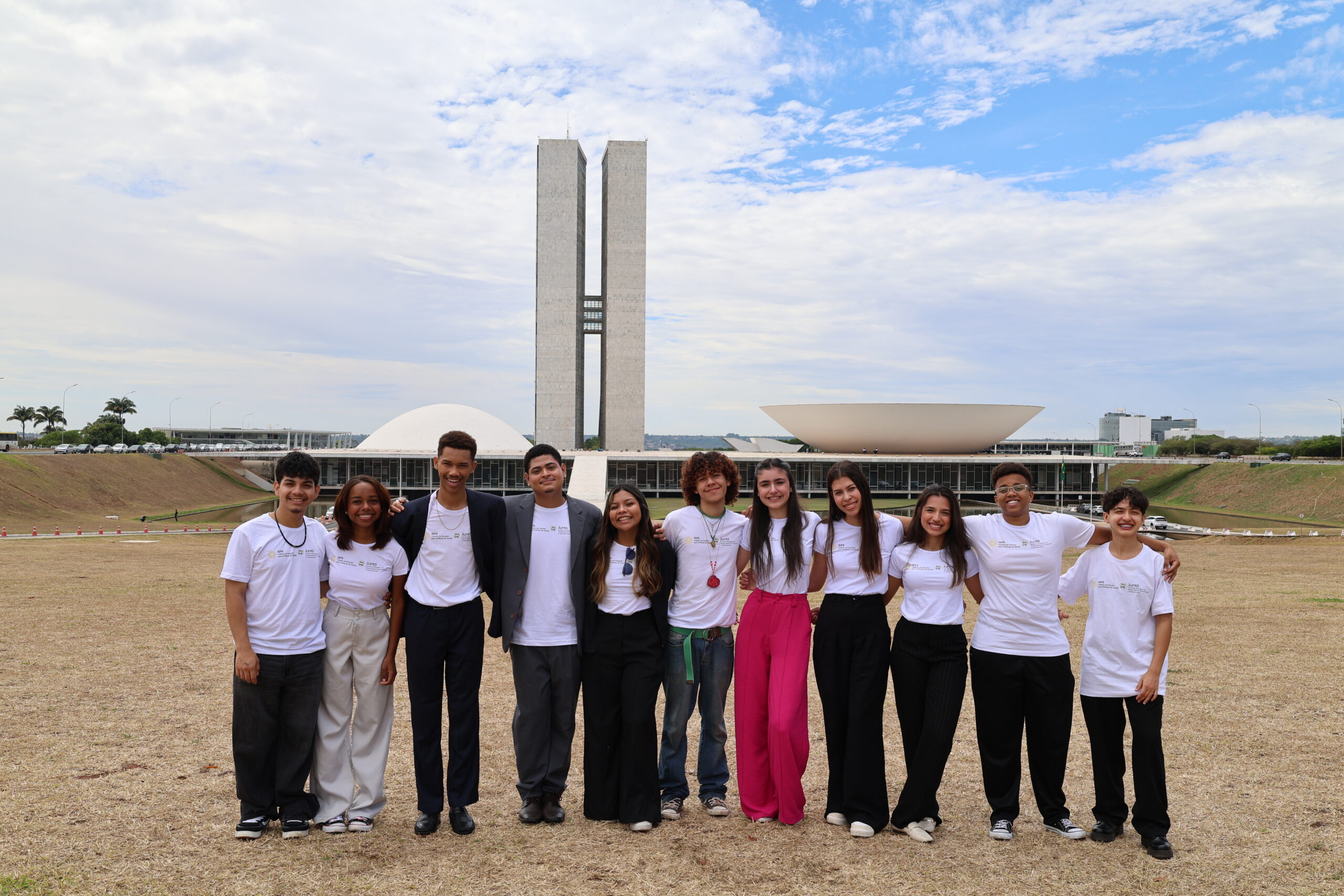
Currently, the committee has 11 teenagers and young adults from all five regions of the country. Coordinated by IEPS and the Child Mind Institute (CMI) — an international organization for research and action on the mental health of children and adolescents — the project is one example of how the opportunity to be among peers is transformative.
“When teenagers realize they can contribute concretely to transforming the reality around them, they cease to be mere participants and begin to recognize themselves as agents of change.” Carolina Costa, manager of the Child Mind Institute.
Daniel, 20, shares his experience of being part of Juntô in Rio de Janeiro (RJ). “I learned to pay closer attention to all the layers that people present, recognizing and embracing their history, their origin, and all the diversity that a life can have.”
These lessons, according to Carolina Costa, national manager of CMI, confirm how collectives are effective tools in the psychosocial development of those who are getting to know the world. “It’s important for teenagers to have affective relationships that generate a sense of belonging. Collective activities have the potential to reduce feelings of isolation and provide environments in which they feel understood and accepted,” she says.
For her, when young people are connected, they develop, above all, self-awareness. “Combined with healthy habits and good living conditions, group interaction helps to cope with stress and overcome adversity without getting sick.”
This is what happened to Isadora. In the committee’s in-person and virtual meetings, she learned to understand her peers and her own feelings. “Today I am able to listen more attentively, support friends when they need help, and recognize when a situation may require professional assistance. This has helped me at home, especially in my relationship with my brother, giving me more understanding, empathy, and sensitivity in certain situations.”
Allowing for protagonism is the key turning point
One of the main points for well-being in these groups is empowerment. According to Carolina Costa, when young people realize that they can be part of some social transformation, they see themselves as protagonists.
“They want more participation in decision-making. The most frequent complaints revolve around the formation of their own identity, sexuality, and important decisions such as college,” she explains. “So, when they are in a group, exchanging ideas with their peers, they develop social skills and are encouraged to make decisions.”
Isadora confirms this importance. “When we have the opportunity to participate, we realize that our voices have value and that we can also contribute to building solutions.”
At the Ceará Youth Collective, Bárbara defends the same and emphasizes that careful listening is a sure tool for creating connections. “We want to ensure that teenagers are protagonists of the transformations they want to see in their communities. Therefore, we seek to create spaces where they can be heard, respected, and recognized as subjects of rights.”
Valter, who grew up surrounded by group activities, says the greatest lesson is realizing the importance of being together. “Being with young people from different backgrounds taught me that no one grows alone. Transforming the world begins with small acts of care, acceptance, and service.”
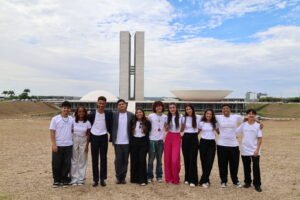
Juntô is an initiative of the Child Mind Institute and brings together 11 young people and teenagers from the five regions of the country in in-person and virtual events. Source: Camila Fortes/Juntô
Mobilization Can Begin Now
Not all boys and girls have the opportunity to be in a mobilizing group. The reasons for this lack are diverse: financial difficulties in maintaining the groups, busy schedules, and little circulation of information.
“When we talk about young people, we need to remember that they study, work, take care of siblings, face long commutes on public transport, and often have few resources,” points out Carolina Costa. She emphasizes that if a participant leaves the group, it doesn’t mean a lack of will or commitment.
Furthermore, for teenagers to find their peers, there is a path that can be mediated by adults. According to Carolina Costa, the experience at the Child Mind Institute made her understand that it is possible to create collectives according to the reality of each community. Understand the main points:
Active listening: create genuine spaces for listening. If young people feel that their opinions will not be taken seriously or that decisions have already been made by adults, they lose the desire to participate.
Topics of interest: Collective projects succeed when they address issues that young people experience daily, such as mental health, the environment, culture, education, or opportunities for the future.
References: Seeing other young people participating, leading initiatives, and generating impact is often one of the biggest motivators for new teenagers to get involved.
It’s important to remember that many collectives don’t have funding from the government or organizations. In this context, Carolina suggests three main points:
Decentralized management: Responsibilities need to be shared among members so that they don’t accumulate in just one person. Overburdening can demotivate participants from continuing in the group.
Active group open to new participants: Members themselves can mobilize their networks, invite friends and acquaintances, and introduce the collective to other people using digital tools, such as WhatsApp groups, an Instagram profile, or TikTok. This allows them to maintain the connection even when people can’t meet in person.
Generating value for participants: People need to see meaning in that space, whether because they find a sense of belonging, because they have a voice, because they learn something, because they are able to transform a reality, or because they build important relationships.
CAMHI BR in the Media
August 21, 2026Give us your
feedback
Let us know what topics you would like to see on our website