




Liturgy of the Age That Never Came
I think no one ever warned me
that growing up could also be a kind of mourning.
There were no bells.
No door opened solemnly,
no angel descended to say:
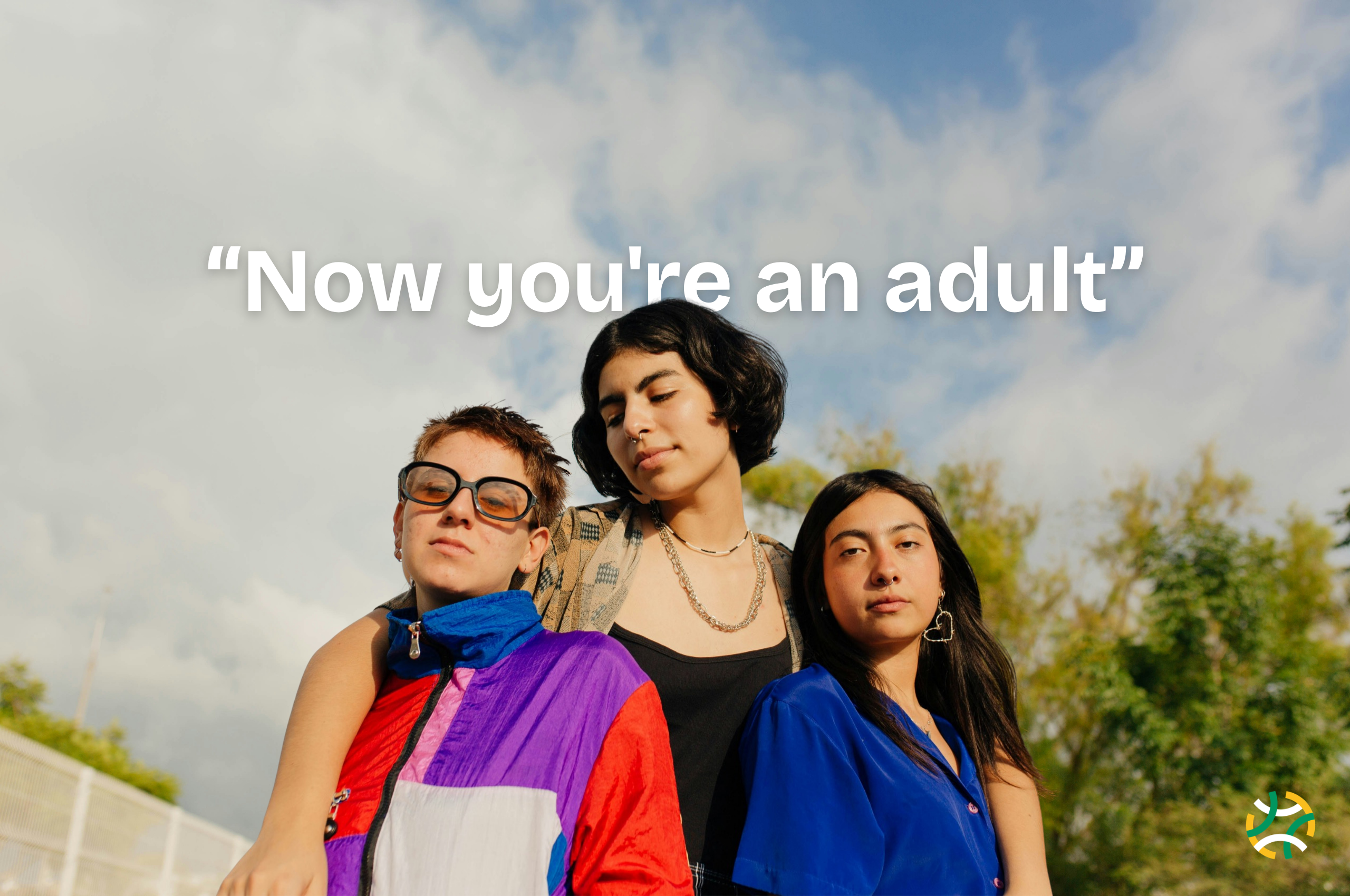
“Now you are an adult.”
It was quieter than that.
One day I was young
and the next, I already knew
that I needed to know.
I needed to know how to get home,
how to cook when hunger came,
how to wash my own clothes,
sweep the floor, pay for something,
organize what no one else would organize,
take a road on my own
and pretend I wasn’t afraid
because fear, apparently,
was also something I was supposed to learn to carry.
And maybe that’s what confuses me most:
I don’t know exactly when I stopped being a child.
Not because childhood lasted too long,
but because, somewhere between one responsibility and another,
it simply didn’t have time to end.
My adolescence wasn’t a bridge.
It was a door I crossed while carrying boxes.
While others learned to grow up
like someone slowly discovering their own body,
I was learning the weight of things.
The weight of a home.
The weight of a choice.
The weight of an absence.
The weight of knowing that, if I didn’t do it,
perhaps no one would.
And there was something almost religious about it.
As if life had placed upon my shoulders
a small invisible altar
and taught me, from an early age,
that some things continue to exist
only because someone kneels before them
and takes care of them.
So I did.
I took care of what needed to be taken care of.
I learned to survive the small domestic fires.
I learned that a sink full of dishes
can also be a prayer,
that clothes hanging on a line
are a kind of white flag against chaos,
that cooking for yourself
is a humble way of saying:
I am still here.
And perhaps traveling alone
was one of my first liturgies.
Me, a suitcase,
a ticket,
a destination written somewhere,
and that strange feeling
that no one would come to get me
if I got it wrong.
There is a very particular kind of loneliness
in discovering that you can leave on your own.
Because when you realize you can walk away,
you also realize that there is no one else
to walk through the door for you.
And that is how I grew up:
not through birthdays,
but through small revelations.
I discovered that being an adult
doesn’t mean knowing exactly what to do.
It means learning to do something
even when no one has explained how.
It means looking at a bill,
a house,
a road,
a decision,
and whispering:
“God, I don’t know.”
And continuing anyway.
Maybe that is the most honest prayer of youth.
Because I am still young.
There is still someone inside me
who wishes to be cared for without having to ask,
who sometimes longs to come home
and find everything already taken care of,
who wishes he could make mistakes
without those mistakes having such heavy consequences.
There is a child inside me
who still looks at the world
waiting for some adult to appear.
But the problem—
and perhaps also the miracle—
is that when I look around,
I realize that adult is me.
And sometimes that hurts.
It hurts because no one should have to
become shelter so early.
It hurts because some people arrive at adulthood
after having been teenagers.
And there are people who arrive at adulthood
after having been needed.
I may be one of them.
And I don’t know if I want to call that strength.
Because strength is a beautiful word
for what, many times,
was simply a lack of choice.
But there is beauty, yes.
There is an almost sacred beauty
in looking back
and realizing that I made a home within myself.
That when there was no manual,
I invented instructions.
That when there was no certainty,
I walked.
That when life demanded maturity
before its time,
I gave what I had.
Not perfect.
Not ready.
But whole.
Maybe that’s why today
I don’t want only to learn how to be an adult.
I want to learn how to be young, too.
I want to discover what exists within me
beyond everything I had to endure.
I want to laugh
without turning everything into a responsibility.
I want to make mistakes
without turning every mistake into guilt.
I want to travel
without every departure feeling like a test of independence.
I want to walk into a clean house
and, for a few minutes,
not wonder who will take care of it afterward.
I want, perhaps, to rest.
Because maybe growing up
doesn’t mean abandoning the child
we once were.
Maybe it means finally going back for them.
Sitting beside them.
Saying:
“You didn’t need to know everything.”
“You didn’t need to be strong all the time.”
“You were allowed to be just young.”
And then, with some tenderness,
taking their hand.
Because there are transitions
that don’t happen before our eyes.
There are ages that never arrive.
There are versions of ourselves
that remain by the roadside,
waiting for a goodbye
they never received.
And perhaps growing older, in the end,
means this:
not celebrating the moment
when we became adults,
but holding a kind of funeral
for everything we had to leave behind
without even knowing
that we were losing it.
Light a candle
for the teenager we were.
For the child who had to hurry.
For the young person who learned too early
how to solve their own life.
And then blow out the candle.
Not as someone who forgets.
But as someone who finally understands
that surviving
was also a way of arriving.
And that, even without bells,
without announcement,
without a sacred passage,
I crossed over.
I don’t know when.
I don’t know exactly how.
I only know that, one day,
I looked at my own hands
and they already knew how to do things
I had never learned to teach them.
That was when I realized:
I did not become an adult.
Life called me by name,
and I answered.
_
Simon Cantionilia is from Aracajú (SE), is 18 years old and is studying International Relations at UFS. He was a member of Juntô Jovem and today works as a communications consultant at Juntô.
Articles, Our Voices
September 9, 2026Do you have a story
or experience about
mental health that
could inspire others?
We’d love to hear your voice!
Share your story with us for a chance to be featured and help others feel less alone.