




Understanding the LGBTQIAPN+ Acronym: Gender, Sexuality, and Respect for Diversity
Why talk about this?
When the topic is sexual and gender diversity, it is still common to encounter doubts, confusion, and even resistance. Many people grow up without ever having heard about these subjects in a clear way, which makes acronyms, identities, and experiences seem more complicated than they really are.
But understanding this topic matters because it is about real people, people who love, study, work, build families, face prejudice, and fight every day for the right to exist with dignity.
The acronym LGBTQIAPN+ brings together different gender identities and sexual and romantic orientations that are part of human diversity:
L: Lesbians
G: Gays
B: Bisexuals
T: Transgender people, including trans women, trans men, and travestis*
Q: Queers
I: Intersex
A: Asexual
P: Pansexual
N: Non-binary
+: Other identities and orientations that are also part of this diversity
* The term travesti refers to a distinct gender identity that emerged within the social, cultural, and political context of Latin America, particularly Brazil, and has no direct equivalent in English. Although travestis may identify with femininity and often adopt feminine names, pronouns, and forms of gender expression, the category should not be understood simply as synonymous with “trans women.” Rather, it constitutes a specific identity shaped by historical processes of marginalization, resistance, community formation, and political struggle. For this reason, many scholars retain the Portuguese term travesti in English-language publications, rather than translating it, in order to preserve its cultural and political specificity. Throughout this piece, the term travesti is therefore used in its original Portuguese form to acknowledge this particular historical and sociocultural trajectory.
Before looking at each of them, it is worth distinguishing some concepts that are often confused.
Gender, sex, and gender expression
These three terms do not connotate the same thing.
Sex refers to the biological characteristics observed at birth, reproductive organs, and other bodily characteristics.
Gender is the way a person recognizes and identifies themselves, which may or may not correspond to the sex assigned at birth. A trans woman, for example, was born with male biological characteristics but identifies and lives socially as a woman.
Gender expression is how each person presents themselves to the world: clothing, hairstyle, language, and behavior. Someone may have a more masculine or more feminine expression without that changing their gender identity.
Sexuality
Sexuality is related to the affections, desires, and relationships we build throughout life, not to the way someone dresses or expresses themselves.
Lesbians: women who are emotionally and sexually attracted to other women.
Gay people: men who are emotionally and sexually attracted to other men.
Bisexual people: people who may be attracted to more than one gender.
Pansexual people: people who are attracted to others regardless of their gender.
Asexual people: people who experience little or no sexual attraction, although they may still develop emotional and romantic relationships.
Trans and queer identities
Intersex people are born with biological characteristics, genitalia, or chromosomal patterns that do not fit the typical definitions of male or female bodies. Intersex is a bodily condition and is not directly related to gender identity or sexual orientation: an intersex person may identify as a man, a woman, non-binary, or in other ways.
Transgender people, including trans men, trans women, and travestis, have a gender identity that does not correspond to the sex assigned to them at birth. Non-binary people, who are also part of the trans community, do not identify exclusively as men or women, sometimes moving between these identities or simply not identifying with either of them.
The term queer is used by people who do not fit into traditional norms of gender and sexuality. Today, it also carries a meaning of resistance to the social expectations imposed on bodies and ways of existing.
How can we support LGBTQIAPN+ people?
Support begins with respect. You do not need to know every acronym or understand every experience to treat someone with dignity. Some simple attitudes can already make a difference:
- Respect the name and pronouns a person uses and identifies with.
- Avoid judging someone’s appearance, clothing, or relationships.
- Listen attentively.
- Do not use your own beliefs to invalidate another person’s experience.
- Recognize that different ways of existing deserve the same rights.
A brief historical context: resistance, rights, and challenges
For a long time, LGBTQIAPN+ people were persecuted, criminalized, and treated as though their identities were a problem to be corrected. Historian James N. Green, author of Beyond Carnival: Male Homosexuality in Twentieth-Century Brazil (2000), shows how the community lived through decades of invisibility, exclusion, and social control, being treated as inappropriate or deviant.
Even so, social movements, community organizations, and activists built important processes of resistance. It was through these struggles that rights such as marriage between same-sex couples, the legal recognition of name and gender changes for trans people, and the recognition of LGBTphobia as a form of discrimination came to exist in Brazil.
None of this happened spontaneously. These are achievements won by people who faced prejudice, violence, and exclusion so that future generations could live with greater freedom.
Experiences, violence, and mental health
When people talk about violence against LGBTQIAPN+ people, many think only of physical aggression. But much of what hurts the most happens in everyday life.
I learned that early on as a trans man.
When I was shouted at and forced out of the men’s restroom and taken to the principal’s office at school, I was not physically assaulted. I left feeling humiliated, exposed, and as though I was wrong simply for trying to live according to my identity. After that, I seriously considered dropping out of school—not because I did not like studying, but because it was difficult to remain in a place where I constantly felt I had to justify my existence.
During the meeting, the principal said I could not use the men’s restroom because it would “set a precedent” for a boy to use the girls’ restroom and commit violence. My identity was invalidated and treated as a problem rather than something deserving of respect.
Later, after changing classes and after many teachers mobilized to ensure my chosen name was respected, I ended up taking classes with two teachers who simply ignored all of that. Even knowing my story, they insisted on calling me by my birth name and used female pronouns when referring to me. It was not ignorance—it was a choice.
This is not an isolated experience. Many LGBTQIAPN+ people grow up hearing that they are confused, that it is “just a phase,” that they need to change, or that they will never be accepted. Others are forced out of their homes, experience bullying at school, face rejection from their own families, or struggle to access their basic rights because of institutional violence.
There are also the quieter forms of violence: the looks, the jokes, the comments disguised as humor, the teacher who insists on using the wrong name, the professional who does not respect your identity, the family member who says they are “protecting” you while trying to erase who you are.
Over time, this takes its toll. Living in a state of constant alert, waiting for the next comment or the next humiliating situation, can lead to anxiety, sadness, isolation, and low self-esteem. Many people begin avoiding places, hiding parts of themselves, or giving up occupying certain spaces out of fear of rejection.
But I also learned that support carries enormous weight. When I was thinking about dropping out of school, my sister told me something I still carry with me today: “Don’t become a statistic. Don’t become just another number.”
Besides her, I had friends who helped me during moments when I no longer had the strength to stand up for myself. When I could not correct someone or explain who I was, they did it for me. It may seem like a simple gesture, but that kind of support helped me stay in school and believe that I also had the right to occupy that space.
Supporting someone, then, is not just about being polite. It can be the difference between someone staying or giving up, between feeling alone or realizing there are people willing to walk alongside them. Sometimes it starts with something simple: calling someone by the right name, respecting their pronouns, and listening without judgment.
Data from UNAIDS Brazil (2020) show that more than 90% of trans people have experienced some form of discrimination during their lives. Research by the National LGBTI+ Alliance (2024) also indicates that bullying and violence continue to affect the ability of LGBTQIAPN+ students to remain in school.
Conclusion
Talking about gender and sexuality is talking about people, rights, and living together in society. The more we understand human diversity, the more capable we become of building safe and democratic spaces. Respect does not require agreement; it requires recognizing that every person deserves to live with freedom and dignity.
Information remains one of the strongest tools against prejudice. And behind every statistic, there is a person, a journey, and a story.
When my sister told me not to become a statistic, I did not understand the weight of those words. Today I do: staying in school, occupying spaces, and continuing to build my own story is also a form of resistance. And perhaps that is exactly what this text is about: every person’s right to exist, to be respected, and to fully live as who they are.
About the author:
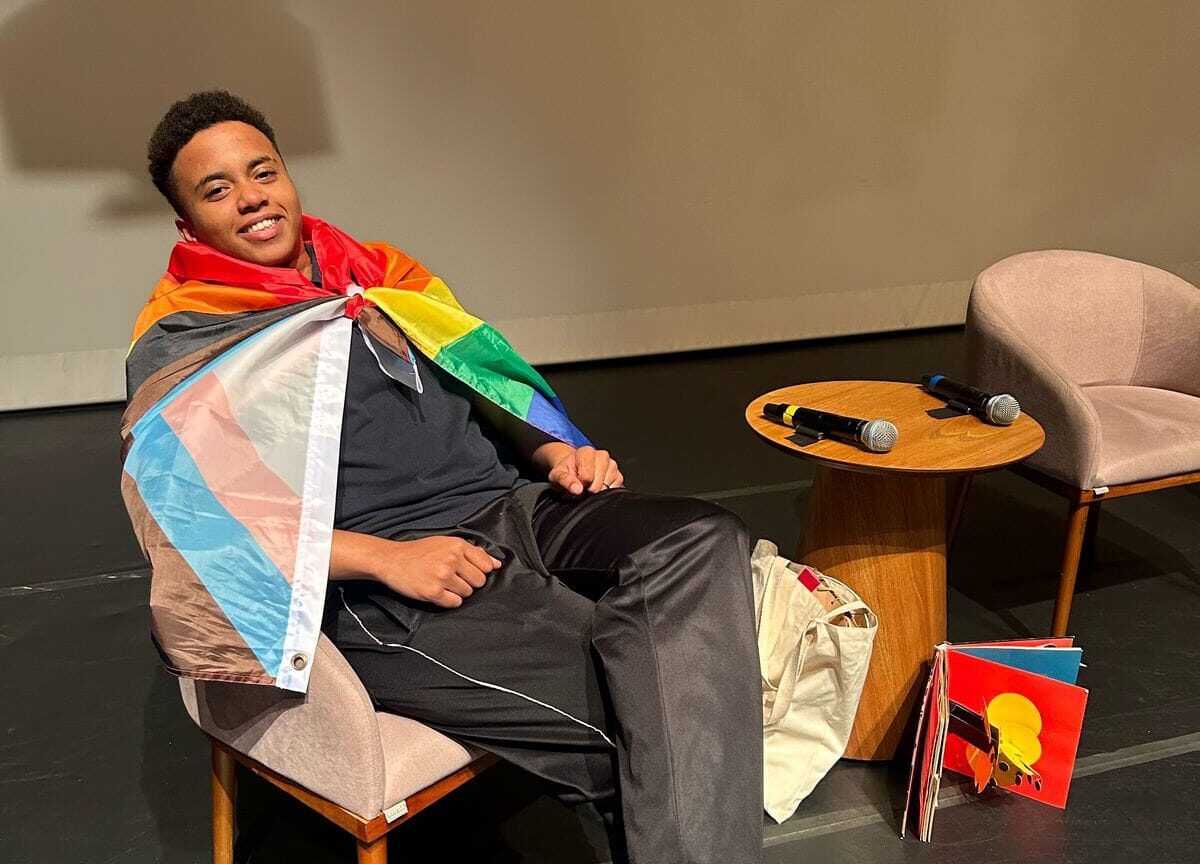
My name is Daniel Nascimento. I am from the West Zone of Rio de Janeiro, Brazil, I am 20 years old, I am a proud trans man, and I am a member of the Juntô Youth Committee.
Articles, Our Voices
July 8, 2026Do you have a story
or experience about
mental health that
could inspire others?
We’d love to hear your voice!
Share your story with us for a chance to be featured and help others feel less alone.